









 RSS
RSS

MIRROR INTERVIEWS | On the “making of” a case file, in conversation with Gianina Găvanescu, Head of Legal & Compliance at CBRE Romania, and Ioana Gelepu, founder of Ioana Gelepu The Office Litigation & Enforcement
15 Ianuarie 2026 T. E. B.
Beyond the technical aspects, the dialogue between Gianina Găvanescu and Ioana Gelepu speaks about trust, intellectual refinement, resilience and about that kalos – moral beauty – which emerges when truth and good are brought together into the light.
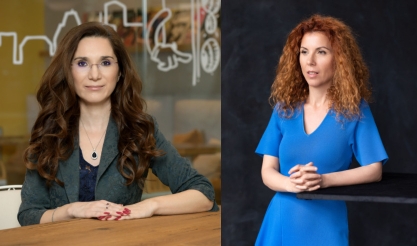
|



A case file that appeared almost overnight, with a dense and ramified factual architecture, difficult to grasp in a single glance, brought face to face two professions which, when they operate at their highest standards, are not defined by the mere application of rules, but by the way they manage to put facts in order, calibrate arguments and make the legal process clear and intelligible for all actors involved.
On one side, an in-house legal department used to processing, at high speed, complex information flows within an international corporation of the calibre of CBRE REAL ESTATE CONSULTANCY.On the other, a team of litigators built around Ioana Gelepu, a lawyer who does not see procedure as a simple succession of formal steps, but as an intellectual journey in which every stage is weighed and integrated into a clear strategy. . .
The case analysed in this conversation with the two protagonists seems, as Gianina Găvănescu, Head of Legal & Compliance at CBRE REAL ESTATE CONSULTANCY, puts it, to come from a blend of Kafka’s atmosphere and the vastness of Proust’s novels: huge volumes of documents, layer upon layer of confusion, details that need to be put back in their proper place for the overall picture to become coherent.
For Gianina Găvănescu, Head of Legal & Compliance, a case file is not just a succession of hearings and procedural steps, but a process of aletheia – the truth that reveals itself through work, curiosity, rigour and a great deal of discernment. Only after this work of clarification can dike appear – justice, the ordering of facts and responsibilities. For Ioana Gelepu, founder of Ioana Gelepu The Office Litigation & Enforcement, this type of case file is familiar ground: a legal universe in which rules, doctrine and case law are articulated in a cascade of arguments, counterarguments and replies, all placed in the service of a case built in a fluid and convincing manner.
The mirror interview below alternates the client’s voice and the lawyer’s perspective around the same themes: how a complex mandate is taken on, how success is defined in a long-running case, how an almost intuitive communication is built between in-house counsel and external lawyers, how the team is structured around a case file and what the challenges of the coming years are for a legal department exposed to increasingly sophisticated risks. Beyond the technical aspects, the dialogue between Gianina Găvănescu and Ioana Gelepu speaks about trust, intellectual refinement, resilience and about that kalos – moral beauty – which emerges when truth and good are brought together into the light.
♦ ♦ ♦ ♦ ♦ ♦ ♦ ♦
BizLawyer: What concrete need led you to seek legal assistance and what type of advice did you require – full representation throughout the entire litigation cycle or a more focused intervention at key stages?
Gianina Găvănescu: For us, the project came completely out of the blue. It looked like a scenario taken from a Kafka novel, but with local overtones and a volume worthy of Proust’s In Search of Lost Time. At that point we were still working under pandemic constraints; I remember very clearly how, at the first handover of documents, we were all wearing masks, which amplified even more the sense of strangeness.
So I would say that our immediate need was to identify a team passionate about this kind of “literature”, able to “shed light” on a colourful and convoluted landscape, to take over quickly and fully the representation on all levels, including any later ramifications of the case.
BizLawyer: How did the mandate handover unfold?
Ioana Gelepu: It was a standard mandate takeover. After we confirmed that there was no conflict of interest, we were provided with the documents related to the project for a preliminary analysis, so that we could absorb more easily and more effectively the information that the client was going to send us. We then had an introductory meeting with CBRE, which helped us familiarise ourselves with the factual aspects.
We discussed those issues that are either not reflected in the documents – for the simple reason that the dynamic life of a company is incompatible with the idea of drafting some sort of annals – or information that helps you correlate data from various documents more quickly. Then the drafting phase began, which unfolded in the typical way: requests for clarification from us whenever we had questions, support from the client regarding the background of the case, finalisation of the material, review by CBRE, receiving suggestions on the line of argument, the final discussion with the client on those suggestions and setting the final touch of the document.
BizLawyer: According to what criteria did you choose the firm/lawyer: experience, recommendations, compatibility, budget?
Gianina Găvănescu: CBRE is a major international corporation. Choosing the lawyers therefore involved, first and foremost, a formal and rigorous selection process.
Given the large, heterogeneous and sometimes difficult-to-correlate volume of information, what we needed above all was a team capable of turning the background noise of the case into a coherent score. We wanted a team able to work efficiently under pressure, with strong command of the legal substance but also with the capacity to finely filter all factual circumstances, to prioritise them and explain them clearly to a dynamic and highly efficient corporate audience.
This key combination of expertise, ability to synthesise, availability and clear, efficient communication made the difference in choosing the firm.
BizLawyer: Taking into account the history of your collaboration with this client – if there were previous mandates, previous results, familiarity with the industry and internal processes – and your experience in similar disputes, what specific criteria made you conclude that you were the right team for this case?
Ioana Gelepu: I could not say that we had a long shared past with CBRE when we took over the mandate. We had only worked together once before, on a one-off advisory matter that ended quickly.
The categories of legal issues forming the capillary network of the case were very familiar to me, as they are core areas of my practice. I knew the subject from all the strictly legal angles: interpretations of the rules, doctrinal debates, trends in case law. This professional background helps a lot when building a case: you understand in an instant that, if you rely on argument A, the other side may raise B and C, and you can respond with X, Y, Z. And this cascade of arguments that unfolds instantaneously before your eyes makes it easier to build a case that is more fluid and convincing. In short, I was in my element, facing a case that I liked.
BizLawyer: How did you define “success” for this mandate right from the outset? Was the procedural route – first instance, appeal, possibly recourse – and the likely duration clear from the beginning?
Gianina Găvănescu: For us, success in this mandate is closely tied to the idea of truth, to what the ancient Greeks called aletheia – the truth that reveals itself gradually as you strip away layers of confusion and bring essential things back into the light. In a complex case, the truth never appears in a pure form, like a Michelangelo statue; it clarifies, it is chiselled, it allows itself to be revealed. And success means for us precisely this process: to discover and bring to light the real factual situation.
Justice – dike for the Greeks, ordering things – can only intervene once the truth has been revealed. So the case is not just a technical exercise, but an entire journey in which clarifying the facts (aletheia) makes justice (dike) possible.
The purely formal procedural route was clear to us from the beginning, but this process of revealing the truth is like a real initiation journey; it requires curiosity, hard work, skill, courage, patience, perseverance and also a touch of humility, because a gaze that is too self-assured may well overlook things…
BizLawyer: How did you define the strategy together with the client so that it was clear from day one?
Ioana Gelepu: Clarity is a precious state, one that is dear to me.
However, the strategy for the entire project was not clear from day one.
In fact, it is very rare for things to be set in stone at the start of a mandate and then everything to unfold as if you had a script to follow. Such a simple recipe can be applied only in rather straightforward matters. Those cases flirt with the idea of a high degree of predictability, which in turn is compatible with a strategy that, once out of its infancy, graduates and then retires straight away.
Most often, cases are like a journey with a meandering route and many unknowns scattered along the way. Bearing this in mind, you can at most impose on yourself the requirement to have clarity on certain aspects, depending on the stage. For example, at the beginning of a case it is important to know the factual situation in detail and to define a certain sphere of elements: which avenues you do not want to pursue because you do not consider them viable; among the arguments that have passed this initial test – what cards you place on the table at the outset and whether you keep certain arguments for a later stage; what evidence you propose.
Beyond that, it is simply unrealistic to claim that you have mapped out all possible scenarios for a case that will be litigated, say, over five years, involving hundreds of arguments and thousands of documents, that you have identified counterarguments to overcome every possible shortcoming and that you have a magic lamp that will miraculously guide you through the entire thicket ahead. If someone has such an overly optimistic vision, they have probably overlooked a substantial part of the strengths and/or flaws of the case.
BizLawyer: How did communication work – pace, format, contact person? How did you see the interdisciplinary collaboration between consultants and what mattered for the smooth running of the project?
Gianina Găvănescu: In this project, I acted as the integration point for the complex information flows coming from CBRE, and Ioana, as coordinator of the team of lawyers, was the fine conduit through which this data was filtered, processed and turned into impeccably structured documents by her and her team. A near-intuitive communication developed very quickly between us.
Communication was therefore fluid, natural and effective, with the ease of data flowing through a well-synchronised neural network. Each piece of information found its proper place at the right time, and this cohesion between the two of us sustained the entire interdisciplinary collaboration.
BizLawyer: How did you structure the team – roles, collaborators – and why in this particular set-up?
Ioana Gelepu: This project was handled at all times by a team of 2–3 lawyers. This is the right size for almost any case – except in very rare situations where the variety of areas involved and the volume of information justify expanding the team. It is natural to have a coordinator and another team member, in order to strike the right balance between experience and knowledge, on the one hand, and project efficiency, on the other hand. If several lawyers perform overlapping activities (for example, studying the same documents), this way of organising things is not efficient (either for the client, if fees are hourly, or for the lawyer, if fees are fixed).
BizLawyer: How did you perceive the firm’s representation before third parties – tone, firmness, credibility? Did you notice any innovation in the way the team worked?
Gianina Găvănescu: Before third parties, Ioana is both first violin and conductor of the entire team – a complex role that suits her perfectly.
I must confess (somewhat shyly) that, in the first days of the project, it was not easy for me to adapt to my role as client. My professional path includes many years of exposure as an external lawyer (in advisory work), where I was the one who felt the full responsibility of managing a mandate. I was also very perfectionist on top of that! It was hard for me to step out of that mindset.
I relaxed completely when I saw the very high level of professionalism at which Ioana and her entire team were working. There were probably dozens of documents prepared, thousands of pages analysed, hundreds of micro-decisions taken over the course of this case and I can honestly say I never had the feeling that anything could have been done better.
And I admit I was also very proud to see Ioana at a tense and emotionally charged hearing, pleading like a consummate professional: clear, rational, ethical, persuasive, with no sophistry and leaving no gaps in the argument. I felt exactly that satisfaction that any client experiences when they feel well represented – a rare and valuable sense of peace and contentment. In such situations, fascinatingly strong bonds are created between people united by the same desire and effort to bring the truth to light.
BizLawyer: What role did previous experience and relevant precedents play in the argumentation? Did you propose unconventional or creative solutions in order to see the mandate through?
Ioana Gelepu: The factual substratum over which the impersonal template of the law is laid means that every case, no matter how familiar you are with its legal area, has its own life, its own unique destiny. And from here comes the insatiable thirst to be the one who writes the happy epilogue of this story to which you are contributing.
This contribution has multiple facets: the purely procedural side, the substantive argumentation, the strategy, communication with the client.
As far as the procedural side is concerned, I do not believe in innovation, but in lawyers who know the Code of Civil Procedure. Procedural rules are like tools made of a tough metal: you need to use the right tool for the right situation. Innovating would mean resorting to an alternative tool – in other words, doing something that the Code of Civil Procedure does not allow. In terms of substantive argumentation and strategy, the material the lawyer works with is more supple, so you can give it various nuances.
BizLawyer: If you were to describe how you perceived the law firm in a few sentences, what would they be and why? How do you assess the collaboration with the coordinating partner and with the lawyers you worked with on the project?
Gianina Găvănescu: They are true professionals of the law who practise advocacy with the mastery and finesse of a genuine art: advocacy as an expression of intellectual refinement involving intuition, creativity, elegance in thinking. The result of their art is “beautiful” in an intellectual sense: clear, coherent, persuasive. It is what the ancient Greeks called kalos – moral beauty, good, worthy, just, noble, well done, well grounded.
As far as the collaboration is concerned, I feel that together with Ioana and her team we form an elite fighting unit and I feel privileged to be part of this team. It is a difficult project, but I personally believe that such projects are far more than purely complex legal exercises – they are also tests of character, will and consistency. They are truly a professional and intellectual challenge – and this is precisely the area in which I feel that both Ioana and I excel (even if it is resource-intensive, which is not insignificant).
I am therefore deeply grateful to Ioana and to her team for this exemplary collaboration. And the fact that our paths have crossed in this project strengthens my conviction that certain encounters happen exactly when truth and beauty (goodness) – aletheia and kalos – ask to be brought into the light. Such encounters are anything but random.
BizLawyer: How did you work with the client – working method, reporting, meetings?
Ioana Gelepu: Collaboration with the client involved constant communication with Gianina, as head of the legal department, and isolated interactions with other departments. This is the easiest set-up for an external lawyer because the (legal) language is shared by the interlocutors. In other set-ups – when the communication bridge leads to departments other than legal (most often HR) – certain challenges may arise from differences in background/language, in the sense that more explanations (on both sides) are needed so that both interlocutors end up having the same understanding of the subject discussed.
Gianina’s style – very pragmatic, quick in forming a panoramic view and then in distilling the essential, focused on solutions rather than anxiety-ridden monologues, with a strong appetite for deeply technical matters and a remarkable ability to simplify the case themes, which sometimes multiplied like Matryoshka dolls – was a real support for us. In short, it was team work, where at times we were simply two lawyers passionately debating an interesting case, just as we did back in law school.
BizLawyer: What do you see as the major challenges of 2026 for the legal department you are part of/you coordinate? How are you preparing for them?
Gianina Găvănescu: We are going through a complex and interesting geopolitical and economic context, both locally and internationally, and this mix of factors will likely have effects on all companies – and, of course, on their legal needs. In such times, the very resilience of companies is tested, and not only from a financial or operational perspective.
So, what I have set out for next year is to consolidate three essential directions in order to remain agile in an unpredictable environment:
♦ partnership with the business (streamlining the approval/contracting flow, a rapid response and more efficient day-to-day interaction);
♦ strengthening corporate governance (clarifying roles, regulating potential grey areas, consolidation);
♦ prioritising less obvious risk areas (AI, ESG, GDPR, AML).
The major challenge will therefore be to maintain the same legal clarity in an environment where the volume of information is growing, reaction times are shrinking and risks need to be anticipated much faster than in the past.



| Publicitate pe BizLawyer? |
  |
| Articol 83 / 4687 | Următorul articol |
| Publicitate pe BizLawyer? |
                                    |
Bondoc și Asociații SCA a obținut anularea unei executări silite într-o cauză cu implicații juridice relevante. Ioana Katona (Partener) și Horea Ile (Associate), în prim plan
Ameropa a lucrat tot cu avocații PNSA în tranzacția prin care a vândut activele Azomureș către Romgaz, pentru 69 milioane de euro. Echipa pluridisciplinară, coordonată de partenerul Bogdan C. Stoica
Mușat & Asociații, desemnată Romania Law Firm of the Year la LMG Life Sciences Awards EMEA 2026
Un portofoliu de peste trei miliarde de euro și patru proiecte strategice conturează una dintre cele mai relevante expresii ale complexității din energia românească | De vorbă cu Oana Ijdelea, coordonatoarea Ijdelea & Asociații despre punctele de fricțiune în dezvoltarea proiectelor energetice, arhitectura juridică transformată într-un veritabil factor de competitivitate și echipa în care mai multe specializări juridice funcționează integrat
Ana Popa, de la primii ani ca avocat stagiar, la rolul de Counsel în practica de Litigii a RTPR: o poveste despre statornicie profesională, implicare directă în mandate dificile și convingerea că excelența în avocatură se construiește prin consecvență, talent și responsabilitate | „Diferența dintre un avocat bun și unul excepțional o face talentul și vocația pentru această profesie. Ceea ce îi permite să rămână în linia întâi este reputația construită în timp, care este strâns legată de încrederea pe care o inspiră clienților”
Filip & Company a asistat Christian Tour în cadrul ofertei publice inițiale și al listării la Bursa de Valori București | Echipa a fost coordonată de Olga Niță (partener)
RTPR asistă EMSA Capital în tranzacția de exit din Aplast
Urmează o perioadă de tranziție critică pentru piața achizițiilor publice din România, marcată de presiuni simultane din direcții multiple. Creșterea cheltuielilor de apărare va genera un volum semnificativ de proceduri complexe, cu specificități juridice pe care puțini practicieni le stăpânesc în detaliu | De vorbă cu Manuela Guia, coordonatoarea GNP Guia Naghi & Partners, despre noile zone de sofisticare juridică și câteva măsuri prin care ar putea crește transparența și viteza procedurilor fără a afecta calitatea evaluării
Florian Nițu (PNSA), singurul avocat din România aflat în cursa pentru titlul „CEE Partner of the Year” la ”Legal 500 Central and Eastern Europe Awards 2026” - nu doar într-un an mai bun, ci după două decenii de consecvență în excelență: „Avocatul a devenit, în fapt, un ‘integrator’ în proiectele complexe, responsabil de alinierea componentelor juridice, comerciale și operaționale ale unei tranzacții. Clientul este azi un partener strategic, sofisticat și continuu implicat în gestionarea serviciului avocațial”
Schoenherr și Legal Ground, în linia întâi a unei tranzacții cu mai multe clase de active prin care Piraeus își restrânge expunerea reziduală din România | Un portofoliu cu credite, leasinguri, participații de risc, garanții și active imobiliare a pus avocații în fața unui mandat aflat la intersecția dintre M&A, banking & finance și real estate
Mandatele sofisticate, în care soluțiile juridice trebuie dublate de înțelegerea mecanismelor economice, confirmă forța practicii de Insolvență & Restructurare a ZRVP, evidențiată în Tier 1 de Legal 500 | Alexandru Iorgulescu (Partener): ”Pot spune că specific practicii noastre sunt mandatele complexe ce reclamă soluții inovatoare, unde lucrăm adesea pe drumuri ‘neumblate’ și în care problemele de dreptul insolvenței se întrepătrund cu cele civile, societare, administrativ-fiscale”
Ritm alert, tranzacții de referință și expertiză recunoscută | Practica de Energie & Resurse Naturale a RTPR, Tier 1 în Legal 500, gestionează integrat mandate care combină M&A, finanțări verzi, autorizare și reglementare, oferind clienților internaționali și locali suport în proiecte cu miză ridicată. De vorbă cu partenerul Bogdan Cordoș despre tendințele anului 2026, interesul investitorilor și mandatele relevante
-
BizBanker
-
BizLeader
- in curand...
-
SeeNews
in curand...
